Super El Niño Alert: Extreme Heat and Weak Monsoon May Impact India in 2026

📰 Introduction
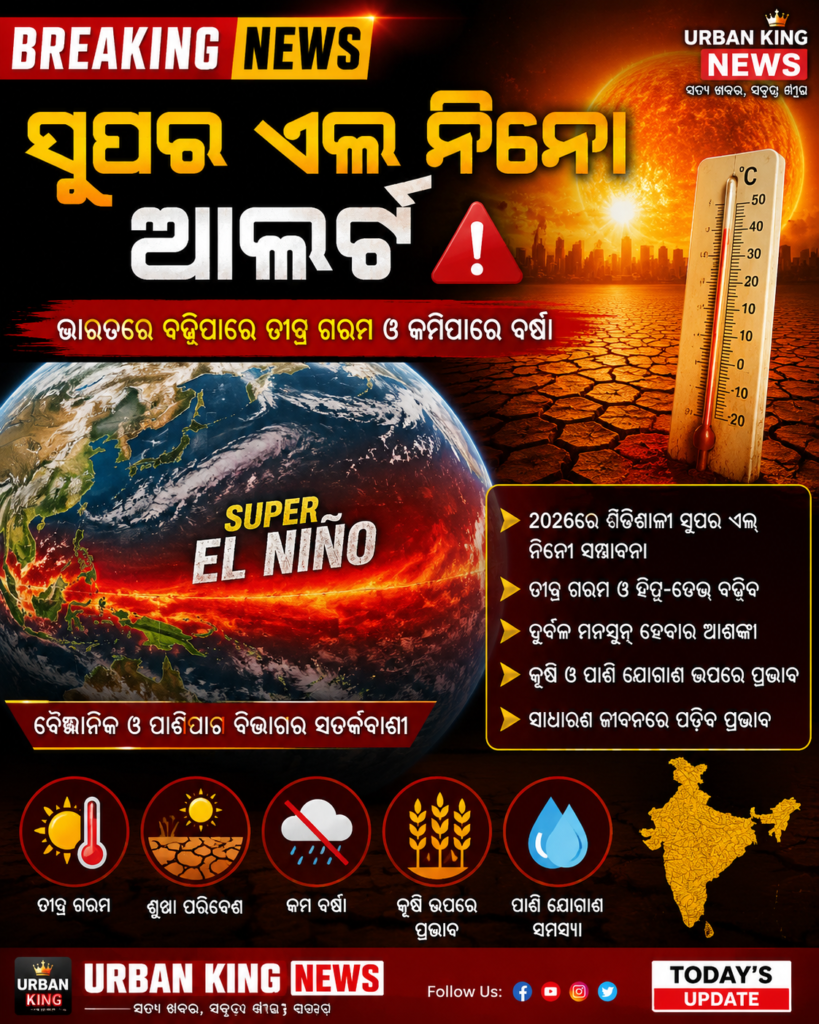
India is facing growing concerns over the possibility of a powerful Super El Niño event in 2026. Climate scientists and weather experts are closely monitoring ocean temperatures in the Pacific Ocean, which indicate conditions favorable for a stronger-than-normal El Niño phenomenon. If a Super El Niño develops, Super El Niño Alert it could significantly impact India’s weather patterns, resulting in severe heatwaves, reduced rainfall, water shortages, and challenges for agriculture.
The potential arrival of Super El Niño has become a major topic of discussion among meteorologists, environmental experts, farmers, and policymakers. Since India heavily depends on the monsoon season for agriculture and water resources, any disruption in rainfall can have far-reaching consequences for millions of people.
What is Super El Niño?
El Niño is a climate phenomenon that occurs when sea surface temperatures in the central and eastern Pacific Ocean become warmer than normal. This warming affects global weather patterns, including rainfall, temperature, and storm activity.
A Super El Niño is an exceptionally strong El Niño event that causes more severe climate disruptions across the world. Such events are relatively rare but can have significant impacts on weather systems and economies.
Historically, strong El Niño events have occurred in:
- 1982-83
- 1997-98
- 2015-16
These events led to extreme weather conditions worldwide, including droughts, floods, and record-breaking temperatures.
Why is India Concerned About Super El Niño?
India’s economy and agriculture are highly dependent on the southwest monsoon. Nearly half of India’s agricultural land relies on rainfall rather than irrigation systems.
When a Super El Niño develops, it can weaken monsoon winds and reduce rainfall across many parts of the country. This may result in:
- Delayed monsoon arrival
- Below-average rainfall
- Reduced water availability
- Lower agricultural productivity
- Increased heatwave conditions
Meteorologists warn that the impact could be particularly severe in regions already experiencing water stress and high temperatures.
Possible Effects on India's Weather
1-Extreme Heatwaves
One of the most immediate effects of Super El Niño is rising temperatures. Several Indian states could experience prolonged heatwaves with temperatures exceeding normal seasonal averages.
Potential impacts include:
- Increased risk of heatstroke
- Health complications for elderly and children
- Higher electricity demand
- Increased cooling costs
- Reduced worker productivity
Cities such as Delhi, Bhubaneswar, Hyderabad, Nagpur, and Jaipur may experience particularly intense heat conditions.
2. Weak Monsoon Rainfall
The southwest monsoon contributes approximately 70% of India’s annual rainfall.
A weaker monsoon could lead to:
- Reduced reservoir levels
- Water shortages
- Lower groundwater recharge
- Stress on drinking water supplies
Several agricultural states may experience rainfall deficits if monsoon activity weakens significantly.
3. Impact on Agriculture
Agriculture remains one of the sectors most vulnerable to climate fluctuations.
Potential consequences include:
- Reduced crop yields
- Delayed sowing seasons
- Lower food production
- Increased crop failures
- Higher food prices
Farmers cultivating rice, wheat, pulses, and vegetables may face significant challenges if rainfall becomes irregular.
4. Water Scarcity Concerns
A weak monsoon can directly impact water availability across urban and rural areas.
Possible consequences:
- Drying reservoirs
- Lower river water levels
- Reduced groundwater availability
- Drinking water shortages
Several states could face increased pressure on water management systems if rainfall remains below normal levels.
5. Economic Impact
Weather disruptions often affect multiple sectors simultaneously.
Potential economic effects include:
- Reduced agricultural output
- Higher food inflation
- Increased energy consumption
- Infrastructure stress
- Supply chain disruptions
Climate-related losses can affect both rural communities and urban economies.
Global Impact of Super El Niño
The effects of a Super El Niño are not limited to India.
Globally, countries may experience:
North America
- Heatwaves
- Drought conditions
- Increased wildfire risk
South America
- Heavy rainfall
- Flooding events
Australia
- Severe drought
- Bushfire risks
Southeast Asia
- Reduced rainfall
- Agricultural challenges
Climate experts emphasize that a strong El Niño event can influence weather patterns across multiple continents simultaneously.
Climate Change and Super El Niño
Scientists believe climate change may amplify the impacts of natural weather phenomena such as El Niño.
Rising global temperatures can:
- Intensify heatwaves
- Increase drought risks
- Alter rainfall distribution
- Increase climate variability
Although El Niño itself is a natural phenomenon, climate change may make its effects more severe and unpredictable.
How Can India Prepare?
Preparation is critical to minimizing the impact of a potential Super El Niño event.
Government Measures
Authorities may focus on:
- Water conservation programs
- Reservoir management
- Agricultural advisories
- Heatwave preparedness plans
- Public awareness campaigns
Agricultural Adaptation
Farmers can consider:
- Drought-resistant crops
- Efficient irrigation techniques
- Rainwater harvesting
- Climate-smart farming practices
Individual Preparedness
Citizens can help by:
- Conserving water
- Avoiding excessive heat exposure
- Monitoring weather updates
- Supporting sustainable practices
Expert Opinions
Meteorologists continue to monitor Pacific Ocean temperatures and atmospheric conditions. While forecasts indicate the possibility of stronger El Niño conditions, experts emphasize that climate systems remain dynamic and predictions may change as more data becomes available.
Weather agencies worldwide are conducting continuous observations to better understand the potential intensity and duration of any future Super El Niño event.
Conclusion
The possibility of a Super El Niño in 2026 has raised concerns about extreme heat, weak monsoon rainfall, agricultural challenges, and water shortages across India. While experts continue to monitor climate developments, preparedness remains essential for governments, businesses, farmers, and citizens alike.
Understanding the risks and adopting proactive measures can help reduce the impact of potential weather disruptions. As climate patterns continue to evolve, resilience and sustainable resource management will play a crucial role in protecting communities and ensuring long-term environmental stability.

Saatviknews is known as Urbanking News in Odisha.Daily update to Local to Global News.Sarakari Yojana and Health and Lifestyle News.
Follow Us on
Recent Post